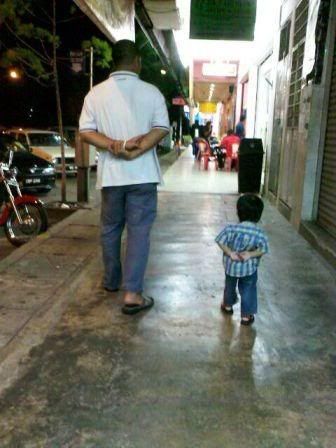
stayed 2 nights @nexus and 2 nights @sutera harbour
and nexus much better....
spacious room..better hospitality..
a bit far...but who cares.....
rent a car laaaa


The Bell Curve is a controversial, best-selling 1994 book by the late Harvard professor Richard J. Herrnstein and American Enterprise Institute political scientist Charles Murray. Its central point is that intelligence is a better predictor of many factors including financial income, job performance, unwed pregnancy, and crime than parent's socioeconomic status or education level. Also, the book argued that those with high intelligence (the "cognitive elite") are becoming separated from the general population of those with average and below-average intelligence, and that this was a dangerous social trend. Much of the controversy concerned Chapters 13 and 14, in which the authors wrote about the enduring differences in race and intelligence and discuss implications of that difference. The authors were reported throughout the popular press as arguing that these IQ differences are genetic, although they state no position on the issue in the book, and write in the introduction to Chapter 13 that "The debate about whether and how much genes and environment have to do with ethnic differences remains unresolved."
The conclusions made in the book are deduced from the research of others. Richard Herrnstein had a strong background in psychology. Co-author Charles Murray was not an expert in intelligence testing.[1]
The book's title comes from the bell-shaped normal distribution of IQ scores. The Normal distribution is the limiting distribution of a random quantity which is the sum of smaller, independent random phenomena. The message in the title is that IQ scores are normally distributed because a person's intelligence is the sum of many small random variations in genetic and environmental factors.
Shortly after publication, many people rallied both in criticism and defense of the book. Some critics denounced the book and its authors as supporting scientific racism. A number of critical texts, including The Bell Curve Debate, were written in response to the book.
and from another website
In many natural processes, random variation conforms to a particular probability distribution known as the normal distribution, which is the most commonly observed probability distribution. Mathematicians de Moivre and Laplace used this distribution in the 1700's. In the early 1800's, German mathematician and physicist Karl Gauss used it to analyze astronomical data, and it consequently became known as the Gaussian distribution among the scientific community.
The shape of the normal distribution resembles that of a bell, so it sometimes is referred to as the "bell curve", an example of which follows:

and the funny thing is bell curve also known as normal distribution...wtf on earth normal distribution..!!!
farewell, good luck, all the best and good bye
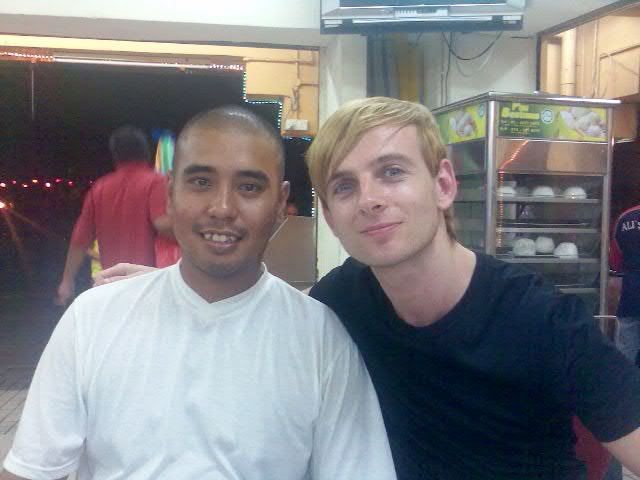
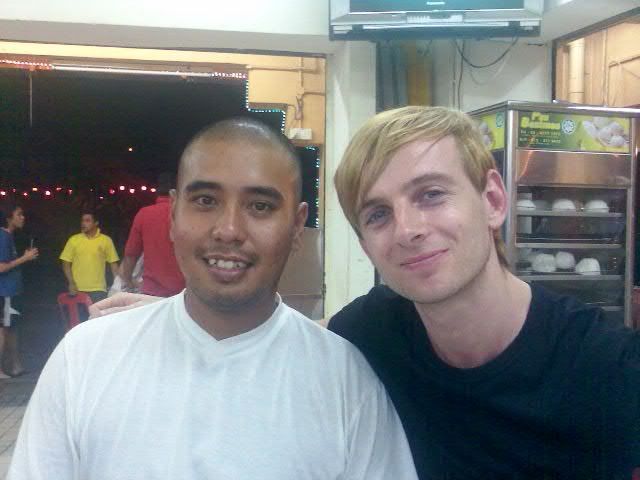
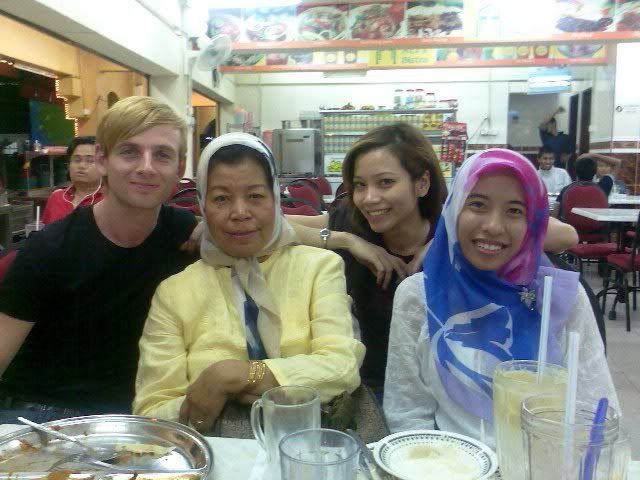
yesterday was our last paper for this term exams….except for 2 of our friends Anne and Mazlan which will be graduating next year….as yesterday will be our very last paper for this semester and very last we’ll be sitting for other exams together with Anne and Mazlan…we had our so called ‘farewell’ lunch before we sat for OB’s paper at 2.10pm…We went to Ali Café Tom Yam Jalan Pantai….all of us was there except for Zul and Henry with are busy with their own schedule..kamil,kak gee,azhan,aizar,rosli and myself was there yesterday..so for Anne and Mazlan…good luck for your future undertakings and wish all of us best of luck for our journey with OUM….


DOA akhir tahun dibaca tiga kali pada akhir waktu Asar atau sebelum masuk waktu maghrib pada akhir bulan Zulhijjah.
Sesiapa yang membaca doa ini, syaitan berkata:
“Kesusahan bagiku dan sia-sialah pekerjaanku menggoda anak Adam pada setahun ini dan Allah binasakan aku satu saat jua. Dengan sebab membaca doa ini, Allah ampunkan dosanya setahun”
*Doa Akhir Tahun
Dengan nama Allah yang Maha Pengasih lagi Penyayang. Segala puji bagi Allah, Tuhan pentadbir sekelian alam. Semoga Allah cucurkan rahmat dan sejahtera ke atas junjungan kami Nabi Muhammad s.a.w. serta keluarga dan sahabat baginda sekelian.
Ya Allah, wahai Tuhan kami, perkara-perkara yang telah kami lakukan daripada perbuatan yang Engkau larang dalam tahun ini, maka kami belum bertaubat daripadanya padahal Engkau tidak meredai dan Engkau memang tidak melupakannya (Tuhan tidak bersifat pelupa) dan Engkau berlembut tidak mengazabkan kami. Malah memberi peluang supaya kami bertaubat selepas kami menceburkan diri melakukan maksiat itu.
Maka, kami sekelian memohon keampunan Mu, ya Allah, ampunkanlah kami dan mana-mana perbuatan yang kami lakukan sepanjang tahun ini yang Engkau redai dan dijanjikan ganjaran pahalanya.
Maka, kami memohon diperkenankan akan perbuatan (amal bakti) yang kami lakukan itu dan Engkau tidak menghampakan harapan kami. Ya Allah, Tuhan yang Maha Pemurah.
Doa awal tahun dibaca tiga kali selepas maghrib pada malam 1 Muharam. Sesiapa yang membaca doa ini, syaitan berkata, “Telah amanlah anak Adam ini daripada godaan pada tahun ini kerana Allah telah mewakilkan dua malaikat memeliharanya daripada fitnah syaitan.”
*Doa Awal Tahun
Dengan nama Allah yang maha Pengasih lagi Penyayang. Segala pujian itu bagi Allah, Tuhan sekelian alam. Rahmat dan sejahtera ke atas penghulu kami Nabi Muhammad dan atas keluarga serta sahabat Baginda sekelian.
Ya Allah, engkaulah Tuhan yang kekal selama-lamanya, sedia ada, kami bermohon kepada-Mu agar terpelihara kami sekelian dalam tahun baru ini daripada tipu daya syaitan yang terlaknat. Juga daripada konco-konco syaitan dan bala tenteranya.
Kami mohon daripada-Mu akan pertolongan mengalahkan runtunan nafsu amarah (nafsu yang mendorong kepada kejahatan). Kami mohon juga kepada-Mu, ya Allah akan rasa sedia ingin membuat kerja-kerja kebajikan yang boleh mendampingkan diri kami kepada-Mu.
Ya Allah, Tuhan yang Maha Agung lagi Mulia, ya Allah, Tuhan yang sebaik-baik yang mengurniakan rahmat.
- Disediakan oleh Jabatan Kemajuan Islam Malaysia (Jakim)
My E.G. IPO covered 212 times
KUALA LUMPUR: The public portion of the initial public offering (IPO) of My E.G. Services Bhd has been oversubscribed 212.59 times, Malaysian Issuing House (MIH) said.
In a statement, MIH said 17,643 applications for 213.59 million shares at an issue price of 55 sen per share were received, against the 23.50 million shares offered.
“This represented an oversubscription rate of 212.59 times,” it said. – AFX-Asia
-- File: anonymous-object, security warning: Corrupted_Zip_file
The uncleanable file is deleted.
ntah ape gile network kat sini,....semua web kene wabak ni...